Currently Empty: $0.00
 NEW
NEW
📢 ANNOUNCEMENT
Explore →
All Courses
Explore our complete course catalog.


Source appropriate textiles based on fabric weight (GSM) and fiber content, vet garment manufacturers, and navigate the sample approval process.
The quality of your clothing brand depends directly on fabric selection and supplier reliability. Understanding textile characteristics and factory vetting protocols keeps you from selecting poor-quality materials or working with unreliable vendors.
┌─────────────────────────────────────────────────────────────────┐
│ FABRIC SPECIFICATION TRIANGLE                                   │
│ 1. Fiber Content : Cotton, Polyester, Nylon, Bamboo, Silk       │
│ 2. Construction  : Knit (Jersey, Fleece, Rib) vs. Woven (Twill) │
│ 3. Weight (GSM)  : Grams per Square Meter (Light, Mid, Heavy)   │
└─────────────────────────────────────────────────────────────────┘| Garment Type | Light Weight | Mid Weight | Heavy Weight |
| T-Shirts | 120 – 150 GSM | 160 – 200 GSM | 220 – 300+ GSM |
| Hoodies / Sweatshirts | 240 – 280 GSM | 300 – 360 GSM | 400 – 500+ GSM |
| Pants / Denim | 6 – 8 oz/yd² | 9 – 12 oz/yd² | 13 – 16+ oz/yd² |
GSM (Grams per Square Meter): The standard metric measurement for fabric density and weight. Higher numbers indicate thicker, heavier material.
MOQ (Minimum Order Quantity): The lowest number of units a factory or fabric mill will agree to produce per order or per colorway.
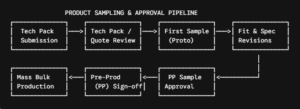
Proto Sample: The initial prototype garment made by the factory to evaluate pattern design and basic shape (often made using available substitute fabric).
PP Sample (Pre-Production Sample): The final sample made with exact bulk fabric, trims, and colors submitted for final approval before mass production begins.
Identify Sourcing Regions:
Domestic Sourcing (Local): Lower MOQs, faster turnaround, easier communication, higher unit production cost.
Overseas Sourcing (e.g., Vietnam, Portugal, Pakistan, China, Turkey): Higher MOQs, lower unit production cost, longer shipping times, tariff consideration.
Audit Prospective Factories: Request business licenses, audit certificates (e.g., WRAP, OEKO-TEX, Sedex for ethical compliance), and photos of existing client work.
Execute the Sampling Process:
Step 1: Order fabric swatch books (swatch headers).
Step 2: Request a First Proto Sample. Test fit, seam strength, and proportions.
Step 3: Send precise sample revision notes with photos and physical measurements.
Step 4: Approve Pre-Production (PP) Sample prior to submitting 50% bulk deposit.
Never initiate bulk production without approving a physical Pre-Production (PP) Sample in exact fabric weight and dye color.
Always request a fabric shrink-test report from the mill prior to pattern creation.
Mistake: Paying suppliers via un-trackable, non-secured wire transfers without written contracts or trade assurance protection.
Correction: Use secure platform options (e.g., Alibaba Trade Assurance, PayPal Goods & Services, or formal Letters of Credit for large orders).
Eco-friendly activewear brand Girlfriend Collective sources OEKO-TEX-certified recycled polyester made from post-consumer water bottles, ensuring full supply chain traceability before placing fabric mill orders.
Scenario: Startup founder David orders 500 oversized T-shirts without requesting a physical PP sample, relying solely on photos sent by the vendor.
Issue: Upon delivery, the fabric feels thin (140 GSM instead of requested 240 GSM) and collars sag after one wash cycle.
Loss: $4,500 in unsellable inventory.
Lesson: Physical sample evaluation and wash/wear testing are mandatory before approving mass production.
Order or acquire 3 different T-shirts from your wardrobe, weigh them using a digital kitchen scale (or estimate density), and rank them by GSM category (Light, Mid, Heavyweight).
Draft a formal Supplier Inquiry Email requesting:
Factory MOQs for custom cut-and-sew knitwear.
Sample turnaround times and sample fees.
Ethical compliance certifications (WRAP/OEKO-TEX).
Pricing tiers for 100, 300, and 500 units.
Quality products start with material selection and supplier vetting. Following strict sampling phases protects your investment from factory defects.
GSM defines fabric weight; ensure your chosen GSM matches your product’s market positioning.
Physical sample testing (Proto to PP Sample) is necessary to ensure quality fit and durability.
Secure payment terms (50% deposit, 50% upon final inspection clearance) reduce financial risk.